
Introduction
Get ready to discover a kitchen secret that will change your snack game forever! Today, we’re diving into the wonderful world of homemade almond butter. Forget those expensive, often sugar-laden jars from the store. This creamy, rich, and utterly delicious spread is a true revelation, boasting a pure, nutty flavor that’s simply unbeatable.
Making your own almond butter might sound fancy, but it’s surprisingly simple and incredibly quick. All you really need are almonds and a good food processor. With just a little patience, you’ll watch whole almonds transform into a velvety smooth butter right before your eyes. It’s a magical process, and the hands-on satisfaction is immense.
So, are you ready to unlock the incredible taste and health benefits of fresh, homemade almond butter? Trust us, once you try this recipe, you’ll never go back to store-bought. Let’s gather our ingredients and get blending!
Cooking Time & Prep Time
- Prep Time: 5 minutes
- Cooking Time: 15-20 minutes (includes roasting and processing)
- Total Time: 20-25 minutes
Small tip: Roasting your almonds beforehand is key for depth of flavor and helps release their natural oils, making for a smoother butter. Don’t skip this step!
Ingredients
This recipe makes approximately 1.5 cups of almond butter, which is about 12 servings (1 tablespoon per serving).
- 2 cups (about 280g) raw whole almonds
- 1/4 teaspoon sea salt (optional, adjust to taste)
- 1 teaspoon neutral oil like avocado or grapeseed oil (optional, only if needed for extra smoothness)
Step-by-Step Instructions
-
Step 1: Preheat and Prepare
Preheat your oven to 350°F (175°C). Line a baking sheet with parchment paper. This prevents the almonds from sticking and makes cleanup a breeze.
Small tip: Using parchment paper also helps ensure even roasting without burning.
-
Step 2: Roast the Almonds
Spread the raw almonds in a single layer on the prepared baking sheet. Roast them in the preheated oven for 8-10 minutes. Watch them carefully to prevent burning.
Small tip: You’ll know they’re ready when they become fragrant and turn a light golden brown. Give the pan a shake halfway through for even roasting.
-
Step 3: Cool Slightly
Remove the roasted almonds from the oven and let them cool on the baking sheet for about 5 minutes. They should still be warm to the touch, but not piping hot.
Small tip: Allowing them to cool slightly helps to preserve the motor of your food processor and also makes them easier to handle.
-
Step 4: Begin Processing
Transfer the warm almonds to the bowl of a high-powered food processor fitted with the S-blade. Start processing them on high speed. Initially, they will break down into a coarse meal.
Small tip: Ensure your food processor is securely locked and on a stable surface.
-
Step 5: Scrape and Continue
After about 1-2 minutes, stop the processor and scrape down the sides of the bowl with a spatula. The almonds will look like fine almond flour at this stage. Continue processing.
Small tip: Scraping down the sides ensures all almonds are processed evenly and prevents any dry spots.
-
Step 6: Watch the Transformation
Keep processing. After another 2-3 minutes, the almond flour will start to clump together and form a thick paste. The natural oils are beginning to release, but it will still be quite dry.
Small tip: This is where patience comes in! The process takes time, but the magic is just around the corner.
-
Step 7: Achieve Creaminess
Continue processing for another 3-5 minutes. The paste will become smoother and start to look like a very thick, somewhat gritty almond butter. Keep scraping down the sides as needed.
Small tip: If your food processor starts to get very warm, give it a 1-2 minute break to prevent overheating.
-
Step 8: Final Smoothness and Seasoning
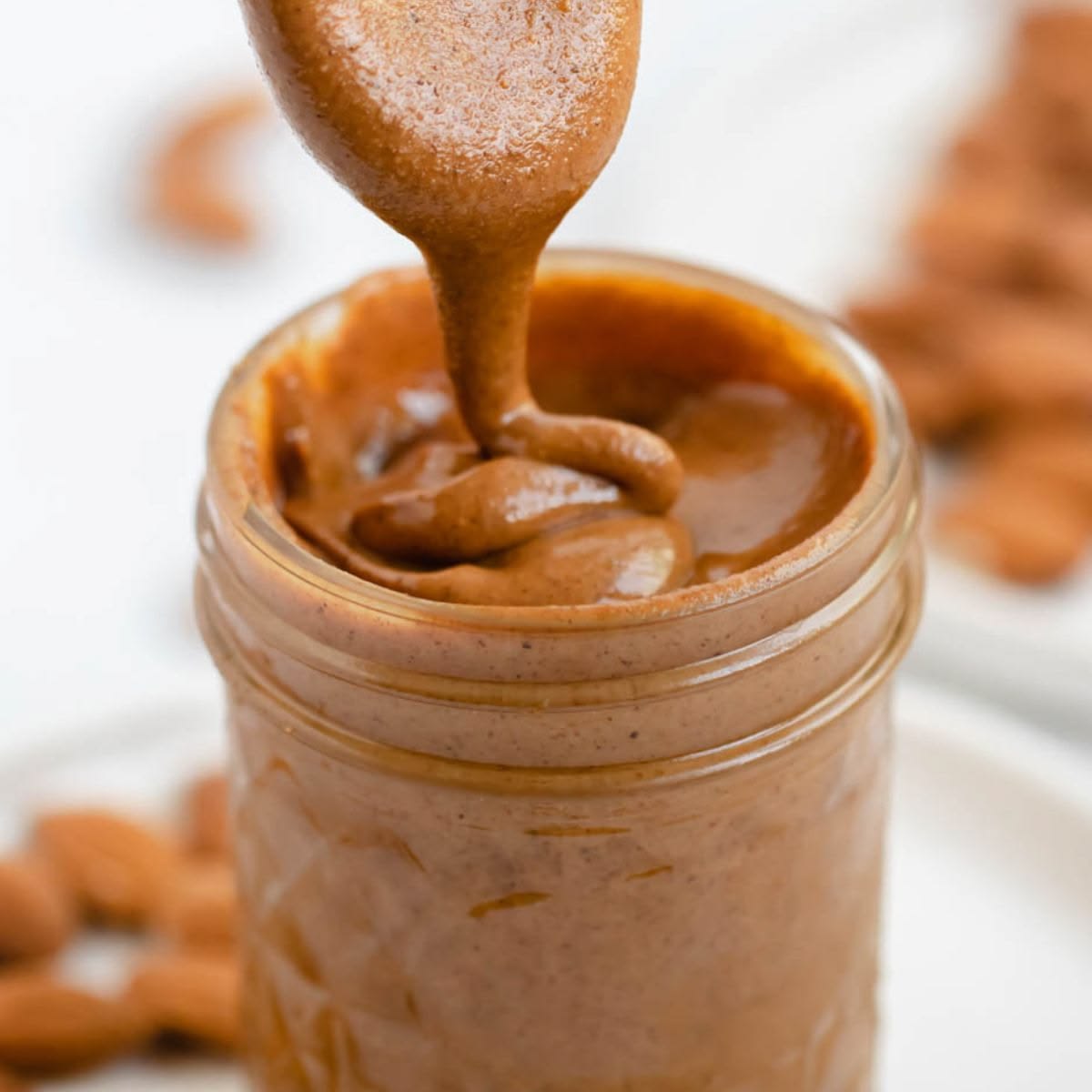
Process for a final 2-3 minutes. The mixture will suddenly become very smooth, shiny, and pourable, resembling the almond butter you know and love. Now is the time to add the optional sea salt and, if desired, the neutral oil for extra silkiness. Process for another 30 seconds to combine.
Small tip: If your butter is too thick or not blending, a tiny drizzle of neutral oil (like avocado or grapeseed) can help it reach desired consistency. Start with half a teaspoon.
-
Step 9: Store Your Creation
Carefully transfer your freshly made almond butter into a clean, airtight jar or container. Let it cool completely before sealing. Enjoy your homemade masterpiece!
Small tip: A wide-mouth jar makes it easier to scoop out your delicious almond butter later.
Tips & Variations
- Naturally Gluten-Free: This recipe is naturally gluten-free, making it a fantastic option for those with gluten sensitivities or celiac disease.
- Perfectly Vegan & Vegetarian: Almond butter is 100% plant-based, making it an ideal spread for vegan and vegetarian diets.
- Boost Your Protein: For an extra protein punch, add 1-2 tablespoons of unflavored protein powder (like pea or rice protein) during the last minute of processing.
- Spicy Kick: If you love a little heat, add a tiny pinch of cayenne pepper (about 1/8 teaspoon) along with the salt. It adds a surprising and delicious warmth.
- Sweet & Spiced: For a delightful flavor variation, add 1-2 tablespoons of maple syrup or honey (if not vegan), and 1/2 teaspoon of cinnamon or a pinch of cardamom during the last minute of processing.
- Chocolate Almond Butter: For a decadent treat, add 1-2 tablespoons of unsweetened cocoa powder and 1-2 tablespoons of a sweetener (like maple syrup) during the final blending stage.
Nutritional Information
Approximate values per serving (based on 12 servings, 1 tablespoon per serving):
- Calories: 160 kcal
- Protein: 6g
- Carbohydrates: 6g (2g net carbs)
- Fat: 14g
Please note: Nutritional values are approximate and may vary depending on exact ingredient amounts and brands used.
Health Benefits
Almonds are truly a nutritional powerhouse, and enjoying them in homemade butter form makes it easy to reap their many benefits!
First, almonds are packed with healthy monounsaturated fats. These good fats are known to support heart health by helping to lower bad cholesterol levels. They also contribute to a feeling of fullness, which can be helpful for weight management.
They are an excellent source of Vitamin E, a powerful antioxidant. Vitamin E helps protect your cells from damage caused by free radicals. This can contribute to healthy skin and a strong immune system.
Almonds also provide a good amount of magnesium. This essential mineral plays a role in over 300 bodily processes, including muscle and nerve function, blood sugar control, and blood pressure regulation. It’s a key nutrient for overall well-being.
Beyond the vitamins and minerals, almonds offer a good dose of plant-based protein and dietary fiber. Protein is crucial for muscle repair and growth, while fiber aids in digestion and helps maintain stable blood sugar levels. All in all, almond butter is a delicious way to nourish your body!
Serving Suggestions
- Classic Toast Topper: Spread generously on whole-grain toast, bagels, or English muffins for a quick and satisfying breakfast.
- Fruit & Veggie Dip: Pair with apple slices, banana, celery sticks, or carrot sticks for a wholesome snack.
- Smoothie Booster: Add a spoonful to your morning smoothie for extra creaminess, healthy fats, and protein.
- Oatmeal & Yogurt Swirl: Swirl into hot oatmeal or a bowl of Greek yogurt for added flavor and nutrition.
- Baking Ingredient: Use it as a healthier fat substitute in cookies, energy balls, or even some cake recipes.
Storage Tips
Store your homemade almond butter in a clean, airtight jar or container in the refrigerator. It will stay fresh for up to 2-3 weeks. Due to the lack of preservatives, it’s best to consume it within this timeframe. While you technically can freeze almond butter for longer storage (up to 3 months), it’s usually not necessary and can sometimes alter the texture slightly. If you do freeze it, thaw it in the refrigerator overnight and stir well before using. No need to “reheat” almond butter; simply let it come to room temperature for easier spreading if desired.
Conclusion
There you have it – your very own homemade almond butter! Isn’t it amazing how a simple ingredient can transform into such a luxurious and versatile spread? This recipe proves that healthy eating doesn’t have to be complicated or expensive. You’ve created something incredibly delicious, packed with goodness, and free from any unwanted additives.
We truly encourage you to give this a try. The process is so rewarding, and the taste is unparalleled. You’ll be amazed at the difference fresh, homemade almond butter makes in your meals and snacks. Plus, you’ll have complete control over the ingredients, ensuring it’s perfect for you and your family.
So, grab those almonds, fire up your food processor, and enjoy the journey to creating your new favorite spread. Share your delicious creation with family and friends – they’ll be begging for your secret recipe!


